
Wine…Whine?
Books about wine. you find them everywhere. The history and evolution and everything you need to know about wine…a book like that may run you a couple thousand pages. wine for dummies…still may run you a couple hundred pages. all of these pages are unnecessary and quite frankly

Lets break it down into…a few paragraphs? a few pages? I just started writing this so we’ll see, but it damn sure wont be a books worth….
how are wines named.
the first way wines are named is by the region. this is more for European wines. wines in America may be grown in the Napa valley, but you’ll never hear a wine just be called a “napa valley” on the other hand, in europe, wines are named after the regions they come from. A Bordeaux comes from the Bordeaux region of france, a Burgundy, from the Burgundy region of France. a chianti, from chianti Italy, and so on and so forth. Now, all of these regions also have specific grapes, or “varietals” that they predominantly, or in some cases by law, are only allowed to use. In Bordeaux, for red wines there are 5 grapes. Cabernet Sauvignon, merlot, cabernet franc, petit Verdot, and malbec. At one point there was a 6th grape, carmenere, but this grape no longer grows in the region. most Bordeaux blends consist mainly of cab sauv and merlot, with the remaining 3 being used more as fillers. You’ll also hear the term left bank vs right bank thrown around a lot. theres a lot of technicalities that go in to these definitions but the main thing you need too know is that “right bank” is mainly merlot with cabernet blended in, and “left bank” is cabernet with merlot blended in. these terms come from an estuary that runs through the Bordeaux region, and describe the wine grown on either side, or “bank”. Got it?
Bordeaux also makes white wines, but are much less popular. the main white wine grape of Bordeaux is sauvignon blanc….therefore, if someone gives you a red Bordeaux, you’ll be drinking a blend of cab and merlot. if someone gives you the much less common white Bordeaux, it will most likely be sauv blanc.
——cool note to tell your friends. just like other plants or fruits that can cross pollinate, or even similar to dog breeding or other domesticated animals, human beings have been cross pollinating wine varietals, or “domesticating” vines to produce the most desirable grapes for hundreds of years. Vines in the wild grow at an uncontrollable rate, but when pruned and controlled, can produce some of the most beautiful fruit on earth. the very famous cabernet sauvignon grape was actually a cross pollination of the sauvignon blanc grape, and the cabernet franc grape. the more you know. ——
Same rules apply for the french region of Burgundy, except even simpler. if someone gives you a red burgundy, its Pinot noir, if someone gives you white Burgundy, its chardonnay. Easy peasy japanese. Don’t overcomplicate it. another big difference in burgundy is the bottle shape. Burgundy bottles are the short fat bottles, and therefore all pinot noir and chardonnay, even from other parts of the world, will always come in this shaped bottle. everything else for the most part will come in the Bordeaux shaped bottle, except for hock bottles, which usually come from Germany or the rhone valley of France, and mainly consist of riesling, gewurztraminer, or pinot gris grapes. We’ll get to these regions later.
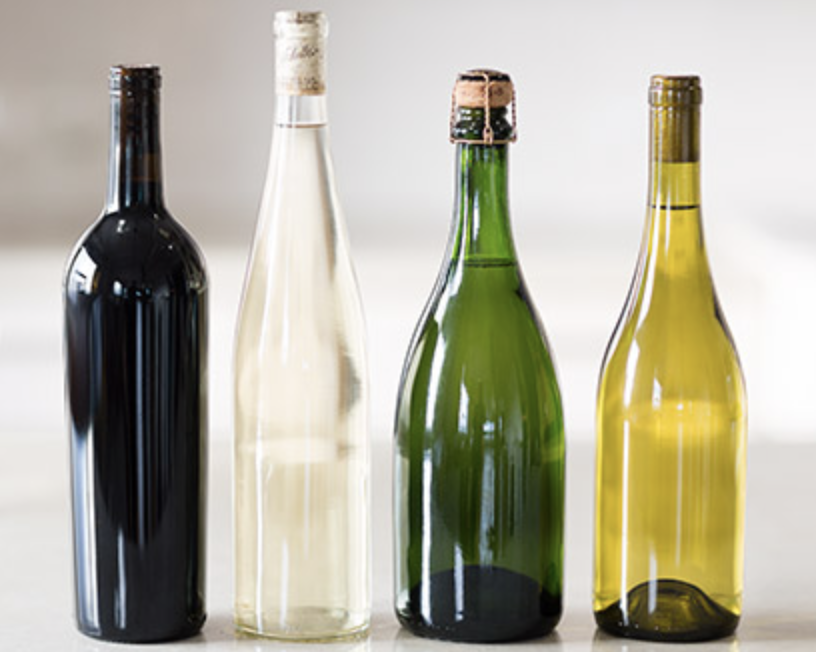
bordeaux, hock, champagne, and Burgundy.
A quick note on glassware. most styles have an accompanying wine glass in which it should be consumed. to be honest, a nice wine glass that covers all bases is good with me and I don’t like to get too fancy with it. it really won’t make that much of a difference. the main glass that I guess could make a difference is a champagne flute, being that the thin shape of the flute will prolong the carbonation, but if it takes you so long to drink a glass of champagne that it actually starts to go flat? drink faster. either way, heres a nice chart that shows all different types of glassware for each style…
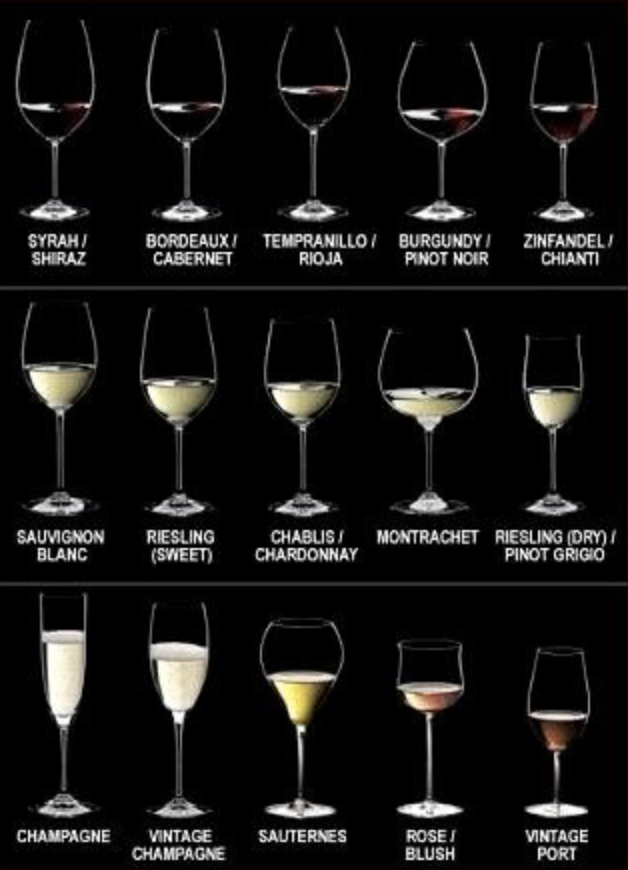
again, there is absolutely no need to use that many different types of glasses, but its a good visual. for me, the Bordeaux style is a good utility glass that gets the job done for all styles. at the end of the day, take a note from Elwood Blues…


A quick note on champagne. Champagne is also a region of france. if the wine is not made in champagne France, then its not champagne. in champagne they use 3 grapes, pinot noir, chardonnay, and pinot munier. other countries may make similar products to champagne, but they are usually made with different grapes, or in the case of prosecco, made in an entirely different process. Champagne is long, arduous work, being bottle conditioned overtime, where prosecco is made in large vats, which is why when your throwing orange juice into some sparkling wine to beat that Sunday hangover, stick with the prosecco and don’t contaminate a nice bottle of champagne. for something a little nicer, go with the Spanish “cava” sparkiling, which translates to “cave” where the wine is matured. Spanish cava is made in the traditional champagne method, or “mothode traditionale” but uses different grapes than real champagne, and obviously doesn’t come with the inflation of actually being made in the champagne region. You’ll get a much better product, with a much lower price tag. Italy also makes its own version of champagne, called francicorta, but you’ll almost never see that on a liquor store shelf, so I wouldn’t worry about it unless your a real guinea and looking to show off. Italy also makes a sweet sparkling wine from the moscatto grape called Spumante that you’ll see every sorority girl or person with diabetes drinking at brunch. Don’t drink Spumante unless you wanna pledge delta gamma, or lose a foot.
A few other European regions of note. Chianti italy, a wine somewhat made famous for Dr Lectures favorite pairing with human liver and fava beans. this wine comes from chianti italy, mainly uses the Sangiovese grape, and can usually be found for a fairly cheep price tag. rather than pairing with human organs and beans, id just grab and nice 10 dollar bottle and pair this with a pizza. another favorite cheep Italian red is montepulcianao d’abruzzo, which you can usually find for 10 bucks or less and also pairs great with pizza, or other red sauce based Italian foods. unlike some other european wines, this wine uses the grape AND the region in the name. the grape being montepuilciana, and the region being Abruzzo, therefore montepulciano grape from Abruzzo italy. Italy also has some nice high end wine, mainly borolo, from the Barolo region of piedmont italy. these wines use the nebiolo grape. i could get further into these wines but honestly, these wines are super expensive, kind of taste like shit unless they’re aged forever, and are a bit pretentious for my liking. Unless you want to give me some for free, I’m not dropping the big bucks on a vintage, or “old as shit” barolo and theres no way I’m buying a young Barolo for a “decent price” and sitting on it for 20 years. if its in my house, its getting consumed. if you want to know more about barolo, google that shit, and enjoy your trust fund.
A few more regions to know. Cote du rhone, or hills of the rhone valley of France, grows Grenache, Syrah, and mouvedre, all grape varietals. Theses come together as a cote du rhone blend, or a GSM. Light, fruit forward, easy drinking wines. a great wine style for a party, as it appeals to everyone. Germany and the german bordering regions of France (Alsace) and Austria, mainly grow riesling, gewurztraminer, pinot gris, or Gruner veltliner. mostly light, refreshing wines with nice acidity, but can come in all shapes and sizes. Riesling is known for being very sweet, but can also be made into an excellent dry styled wine. You’ll notice these differences on the labels by either being late harvest, or auslese/spatlese rieslings(sweeter) or Kabinett, or straight up dry riesling. These are the wines using the hoch style bottle shape, tall and skinny. Northern italy, which also borders this region, produces the very popular pinot Grigio, which is the same grape as pinot gris. light, refreshing, smallllll touch of sweetness, very popular with old white ladies.
Quick notes…
Sancerre- region in france, made with sauvignon blanc
Vouvrey- region in francés Loure valley made with Chenin blanc grapes. Light, crisp, semi sweet. great summertime wine.
chablis is a smaller, sub region of Burgundy, so in turn, when you drinking chablis, your drinking chardonnay. usually a lot less oaky than other Burgundy whites with more acidity.
Chinon- region of France, mainly cabernet franc
Cahors- region in southern france, mainly producing Malbec. not all that common.
Chateneuf du pape….an excellent, fairly high end red, mainly made from the Grenache grape. this wine is named after the commune, or kind of little village, in which it comes from. the commune was a housing place for many Roman Catholic popes during the 1300s, hence its name, chateneuf du paps, or new castle of the pope.
Beaujeleis…wine producing region of France, making light and fruity red wine from the gammay grape. beaujeleis is also famous for its beaujeleis nouveau, which is the first wine of the new vintage. this wine is released on the third Thursday of November every year and is made from grapes of that new harvest season, meaning it is only fermented and aged for a few weeks, making a very fruity easy drinking wine, known more as a celebratory wine of the new vintage season.
the redheaded stepchild of europe, but in my opinion deserves more credit is portugal. As an added tidbit, find a bottle of vino verde, which is a portuguese white wine literally translating to green wine. you can usually find these bottles for about 6 bucks. no sniffing and thinking and swishing with this wine, just get it cold as shit on a hot summers day and enjoy.
for spanish wines you’ll mainly be drinking tempranillo, which is a great red wine you can still find for a decent price. they also produce a good amount of garnacha, which is the same thing as the French Grenache grape, usually found in rose wines.
And that brings us to rose. If your looking for a higher class rose, look for something from the Provence region of France, which should still only run you about 20 bucks for the more expensive side, and also usually made with the Grenache grape, but for my money, when your drinking rose, grab a good 10 dollar bottle and relax. as i said with vino verde. Don’t take yourself too seriously here, this is for the end of a long day, or a hot day when there should be as little thinking involved as possible. Enjoy. Your. self.
take a break. drink some wine. think about that wine now that your a new expert of european/old world wine. Now lets dive into new world.
New world mainly consists of America and Australia, with south Africa and south america thrown in and actively growing as wine regions in their own right. When we’re talking about new world, the script was flipped. no longer were they naming wines after regions because well, there were no regions. No-one gave a shit about Napa valley or sonoma, but wine drinkers still knew varietals, so a man named Robert Mondavi, whom i would hope you’ve heard of before, started naming his wines after the varietal they were made from. I will not give a history on Robert monday, but this site wikipedia has a decent write up on him, but the cliff notes basically go as follows. all California wine was shit that came in huge jugs; think Carlo Rossi; mondavi started making higher end wines and bringing a name to California. (years later he teamed up with the most influential winemaker in the world who happens to have the last name Rotheschild(do i need to tell you to google the rotheschileds?) and made a wine called opus one. (its been in the papers.) Mondavi was naming his wines after the varietal, but making them in the european style. So he would make a Bordeaux style wine, but rather than call it a red Bordeaux, it would be a merlot, or cabernet. or rather than call it a red or white Burgundy, it would be chardonnay or pinot noir. the 2 most popular not only became that way because they were excellent, but because as most Americans shortened traditional human european names like anthony to tony, Leonardo to Leo, or Francesco to frank, they in turn shortened chardonay to chard, and cabernet sauvignon to Cab. The everyday American could walk into a restaurant and order the chard or cab without hesitance and feel sophisticated at the same time. Hence the rise of these two styles. both of these styles also won the famous desision of Paris in the 70s and really put california wine on the map. they made an alright movie about this starring Chris pine which you could watch or not. Another major varietal in cali is zinfendel. thought to have been an American native, but turns out it is a relative of the Italian primitivo grape. The best of these wines come from the Lodi region of cali, so look for that on the label. Usually fairly fruit forward, a bit higher in alcohol, and used in a lot of california blends.
Cali always gets the main recognition for the US, but there are other states that are major producers throughout the country. First up is the pacific northwest. Oregon and washington. the willamet valley of Oregon produces some of the most sought after pinot noir in the country. a quick tip, its pronounced..Will, am, et valley. You’ll sound like an idiot if you get it wrong. also known for their riesling and pinot gris. On the eastern side of the country you have the finger lakes of New York. you wont see these wines as often throughout the country but its a big tourist destination, mainly producing german/austrian style wines like riesling, gewurztraminer and Gruner veltliner, usually a bit on the sweeter side.
the same could be said of Australia, except in Australia they don’t give a fuck how you pronounce your varietlas. the most popular style of wine in Australia is shiraz. shiraz is the name of the grape, this grape is actually the “syrah” grape from the rhone region of france. Now…picture crocodile dundee. you gave him this lovely French grape named Syrah. he looks at it, looks at you, and says, shiraz? you say no crocodile Dundee, its pronounced Syrah. He says, shiraz eh? you say yes sir, thats shiraz, because he has a big ass knife and you don’t wanna argue. one of the great things about Australia. as Americans try to shorten grape names to be able to pronounce them and sound sophisticated. Australians said, nah, fuck off, I’m calling it what i wanna call it mate. so shiraz was born.
New Zealand grows Sauvignon blanc. the main region here is marlborogh. Unlike their massive cousin to the west, Australia, new zealand didn’t completely change the name, but rather gave it the street name of savvy B, and walk around drinking it right out of the bottle like they were drinking 40s in south central LA.

South America. there was this war fought in the 1940s. Germany tried to take over the world ya see. it wasn’t great. but one thing it did that was good? it took Europes long history of winemaking skills and spread them across the world. see, europe wasn’t that nice of a place to live at that time. Many of Europes beautiful vineyards turned into battlefields. so some of the worlds greatest winegrowers up and moved to other parts of the world, bringing in the “new world” wine regions. one of these major regions was south america, specifically argentina. This is the rise of malbec. as i stated a few paragraphs ago, Malbec is one of the 5 varietals of Bordeaux, but never really was able to shine in the shadow of merlot and cabernet, until it found its home away from home in argentina. Malbec is now the main wine varietal grown in argentina. the beautiful thing about Malbec is you can find excellent bottles for 10bucks, but you can also get fancy and find some extrodinarry examples for a higher price range. Bang for your buck, i think Malbec is the best way you can go. and the beauty is, its still a young enough region, that you never know what could come next, or what they have in store. Great fruit character, earthy, full bodied, and the best varietal to go with a big slab of beef. 10 bucks. Also keep an eye out for the varietal carmenere, grown mainly in Chile. carmenere used to be the 6th varietal of Bordeaux, until it was thought extinct due to poor growing conditions in the region. this grape was brought over to south america, and for years was thought to be a variety of merlot, until DNA grafting found that it was a remaining strand of careener. a relic of the past, found thriving thousands of miles away from mother Bordeaux. drink up.
the third new world region of note is south africa, famous for its variety pinotage. kind of tastes like burnt rubber. if thats your thing.
so thats it. the cliff notes on wine varietals, how they’re named, where they come from , and a few talking points to make you sound smart at dinner parties. As you can see I didn’t write much in terms of tasting notes, aromas, what you should look for etc, because at the end of the day, wine is the most subjective thing in the world. smell what you THINK you smell, taste what you THINK you taste, and like what you THINK you like. just remember to THINK about it mannn. there is no right or wrong answer when it comes to wine. its all about confidence. Even though your most likely wrong, who gives a shit. most importantly. drink up, and, Enjoy. Your. Self.
 thedailyconsumption